

Where It All Began
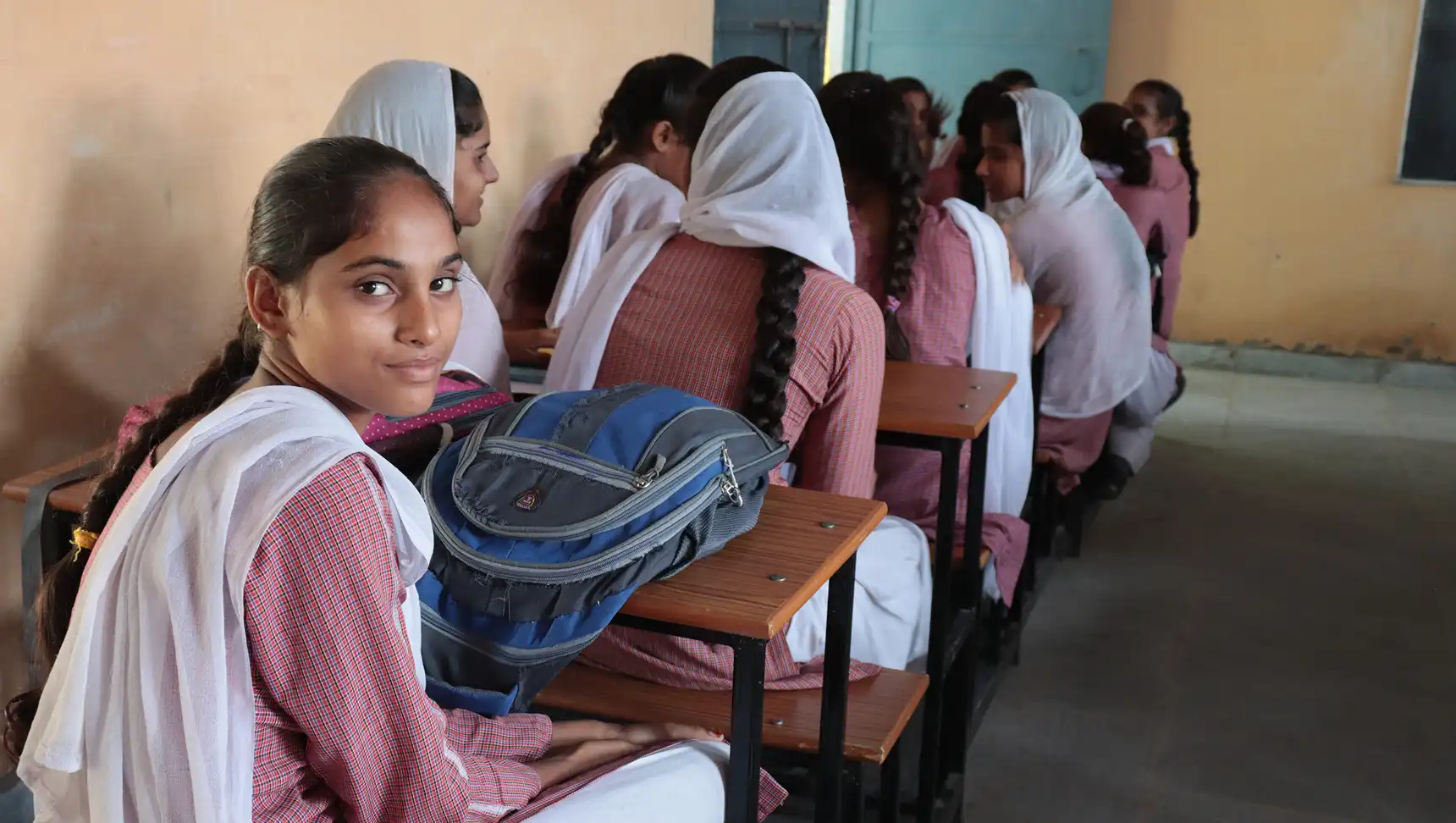
Saheli Ki Udaan took root in Haryana, beginning as a small pilot and growing into a movement that now reaches all 33 Kasturba Gandhi Balika Vidyalayas (KGBVs) across 10 districts. Today, it supports more than 5K+ adolescent Girls from marginalized communities, in partnership with the Government of Haryana.
At its heart, the program builds agency and voice, creating a powerful ecosystem of holistic education that involves teachers, wardens, parents, and government officials. Together, they form a circle of care that strengthens each girl’s learning and well-being.
Girls participate in weekly sessions that nurture foundational English and critical skills. Teacher workshops, anchored in NCERT materials, ensures quality and consistency, while Interactive Voice Response System (IVRS) calls keep parents engaged as active partners in their daughters’ journey. Technology deepens this systemic transformation, with tablet labs in every KGBV bridging the digital divide and expanding opportunities for Girls in even the most remote corners.
Impact at a glance:
Improvement in sentence construction in English (academic outcome)
More Girls felt they could make important life decisions (agency & self-efficacy)
More Girls felt good about their social group and belonging (confidence & well-being)
Scaling through systems, not silos
We didn’t grow by pushing our way in. We grew because state governments invited us in. They saw results, and more importantly, they saw ownership at the ground level.
“This is not an NGO doing a project. This is us, as a system, evolving.”
— KGBV Principal, Haryana
IVRS Program in Haryana
The IVRS (Interactive Voice Response System) program is a part of our Village Model. Introduced during the COVID-19 pandemic and continuing since then, it engages parents and government officials across 10 districts of Haryana. The program aims to strengthen parental involvement in Girls’ education through weekly audio messages delivered via automated calls, ensuring consistent communication and community participation.
Key features of the program include:
- Thematic Story Campaigns: Focused on Digital Literacy, Health & Hygiene, Financial Literacy, Government Policies, and Environmental Awareness. Each campaign included structured stories followed by a quiz to ensure retention and engagement.
- Curriculum-Based Campaigns:
Aligned with Foundational English and Critical Skills for Adolescent
Girls (CSAG) curriculum. These reinforced
school learning, collected
feedback, and strengthened the
home-school connection.