


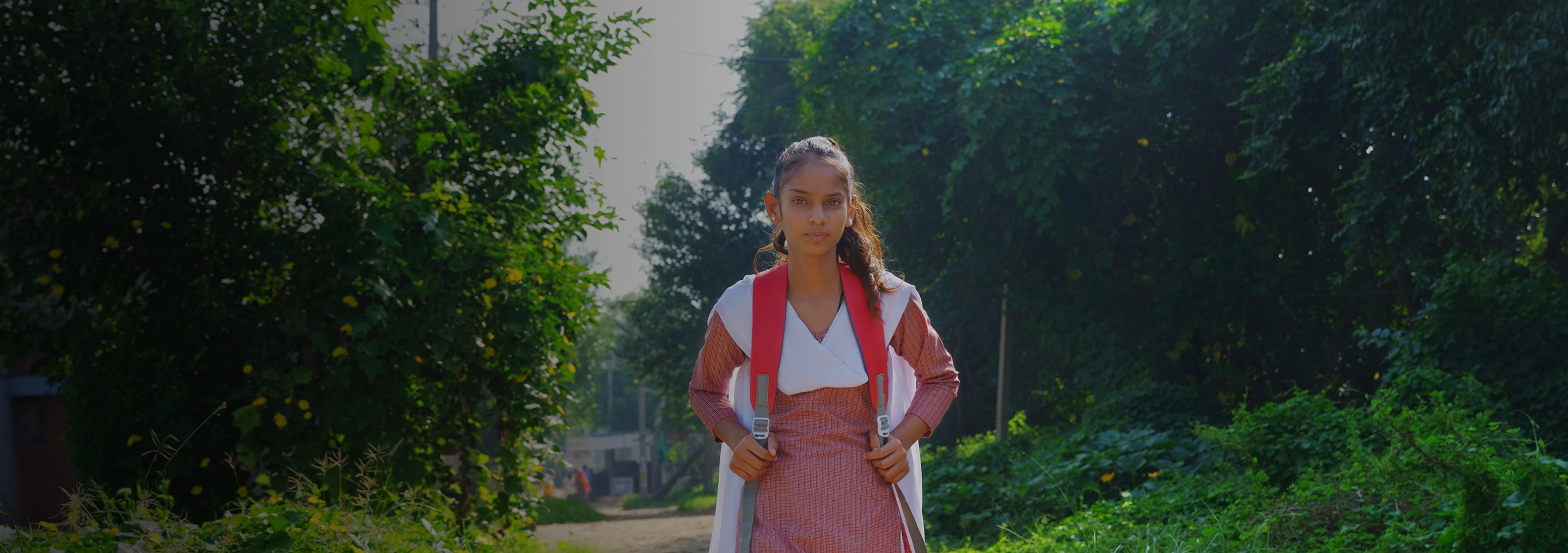
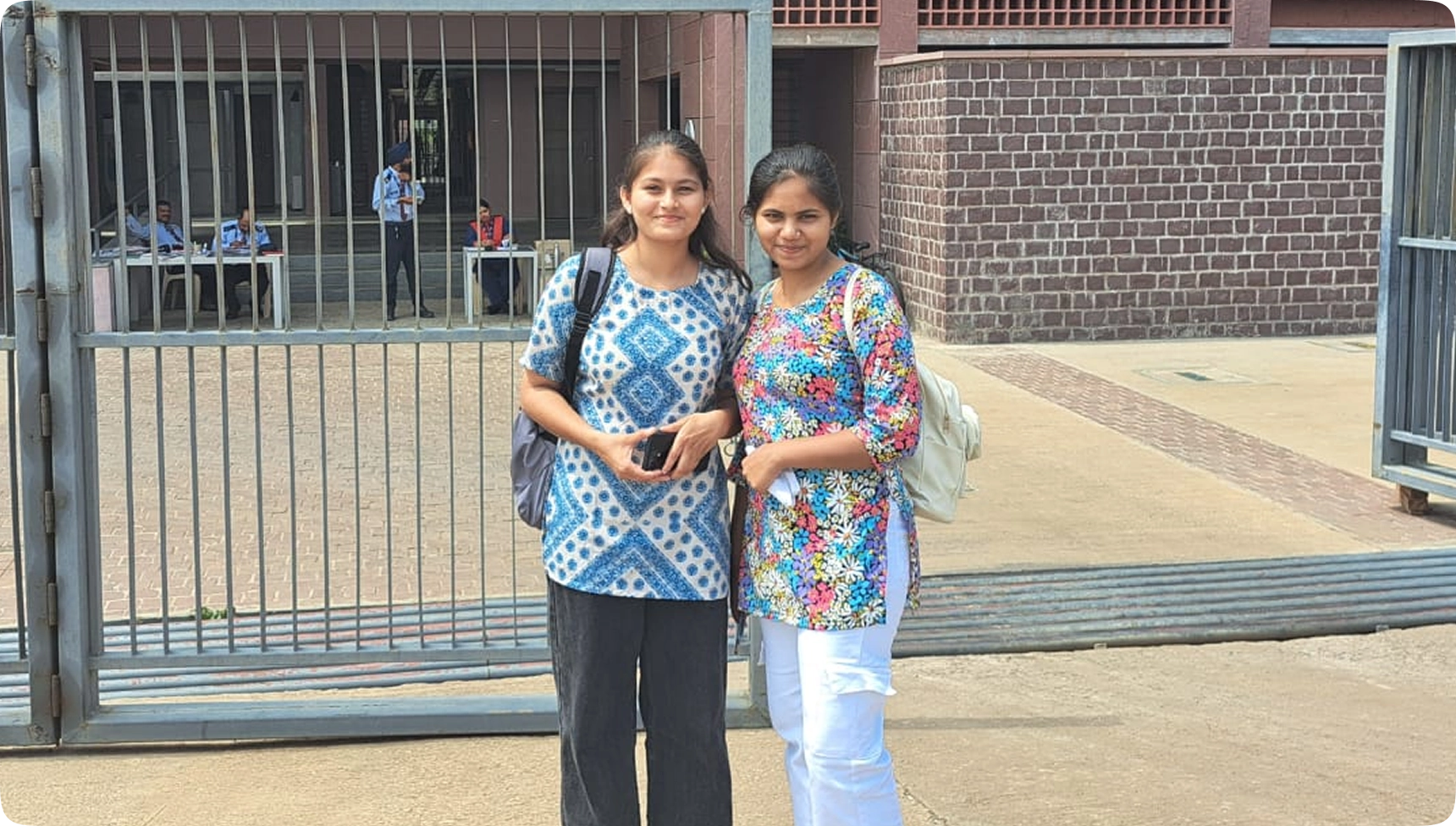
In the quiet village of Phullia Khurd in Haryana’s Jind district, two Girls— Muskan and Saloni have become living examples of what change looks like when opportunity meets determination. Both students of Kasturba Gandhi Balika Vidyalaya (KGBV), their journeys reflect the reality of countless Girls in rural India where education is often a privilege, not a promise.
Growing up, both faced more than their share of challenges. Saloni, who lost her father early, was raised by her mother and uncle. Her uncle, who had once given up his own dreams of higher education, made it his mission to see Saloni succeed. Muskan, on the other hand, grew up amidst family separation. Her parents were divorced, and her mother sold vegetables to make ends meet. When she wasn’t in the hostel, she lived with her paternal aunts, who raised her with care but often had limited means to support her aspirations. Despite their circumstances, both Girls held onto a quiet conviction that education could change their lives.
Their turning point came through SwaTaleem’s Innovation Lab and its Kal Ki Kirne (Career Awareness) program—a unique initiative designed to support Girls in KGBVs make informed decisions about their futures. The dropout rate after Grade 12 is often high among adolescent Girls in rural India, but through mentorship and exposure, Kal Ki Kirne bridges that gap between dreams and direction.
During one of the sessions, the SwaTaleem team introduced the Girls to Azim Premji University (APU), a prestigious institution known for supporting first-generation learners. For Muskan and Saloni, the idea of studying there seemed far-fetched at first. Yet with encouragement from SwaTaleem’s field team, they decided to apply for the undergraduate program in Social Science at APU’s Bhopal campus.
The preparation process was an entirely new experience. Neither of them had ever taken an online entrance exam before. But APU offered a Bridge Course to support students from low-income families strengthen foundational English and Math skills. Using the Digital Tab Lab established by SwaTaleem, both Girls attended online classes regularly from their hostel. Guided by mentors like Aradhana and Preeti, they practiced diligently each study session bringing them one step closer to their dream.
On December 14, 2024, both Girls appeared for the entrance exam in Hisar, supported by their principal and Teachers. Weeks later, they received the news that would change their lives they had cleared the exam and secured admission at APU. For a moment, everything felt possible.
But new hurdles soon emerged. Finances were the first. Their families’ limited incomes made higher education seem unaffordable. The SwaTaleem team stepped in again, guiding them through APU’s financial aid process. When technical issues and missing documents threatened to derail their applications, the team intervened with persistence making calls, coordinating with university officials, and supporting their families gather the necessary paperwork. Eventually, both Girls were awarded full scholarships worth ₹18 lakh each (approximately $20,000).
Family approval was the next challenge. Rumors and misconceptions almost forced Muskan to withdraw her admission, while Saloni’s family struggled to believe such an opportunity was real. But the SwaTaleem team spent hours in conversation with their guardians patiently explaining, reassuring, and rebuilding trust. Finally, the families relented, proud to see their daughters stepping into a future they themselves had never imagined.
Today, Muskan and Saloni stand as the first Girls from their village to attend a top university in India. Their stories are not just about academic success—they are about breaking barriers of gender, class, and geography.
Through Kal Ki Kirne and the broader efforts of the SwaTaleem Innovation Lab, their dreams turned into degrees, and their voices into vision.
“We’re the first from our village to study at a top university.
— Muskan & Saloni, selected to Azim Premji University on full scholarships
SwaTaleem helped us believe it was possible.”